
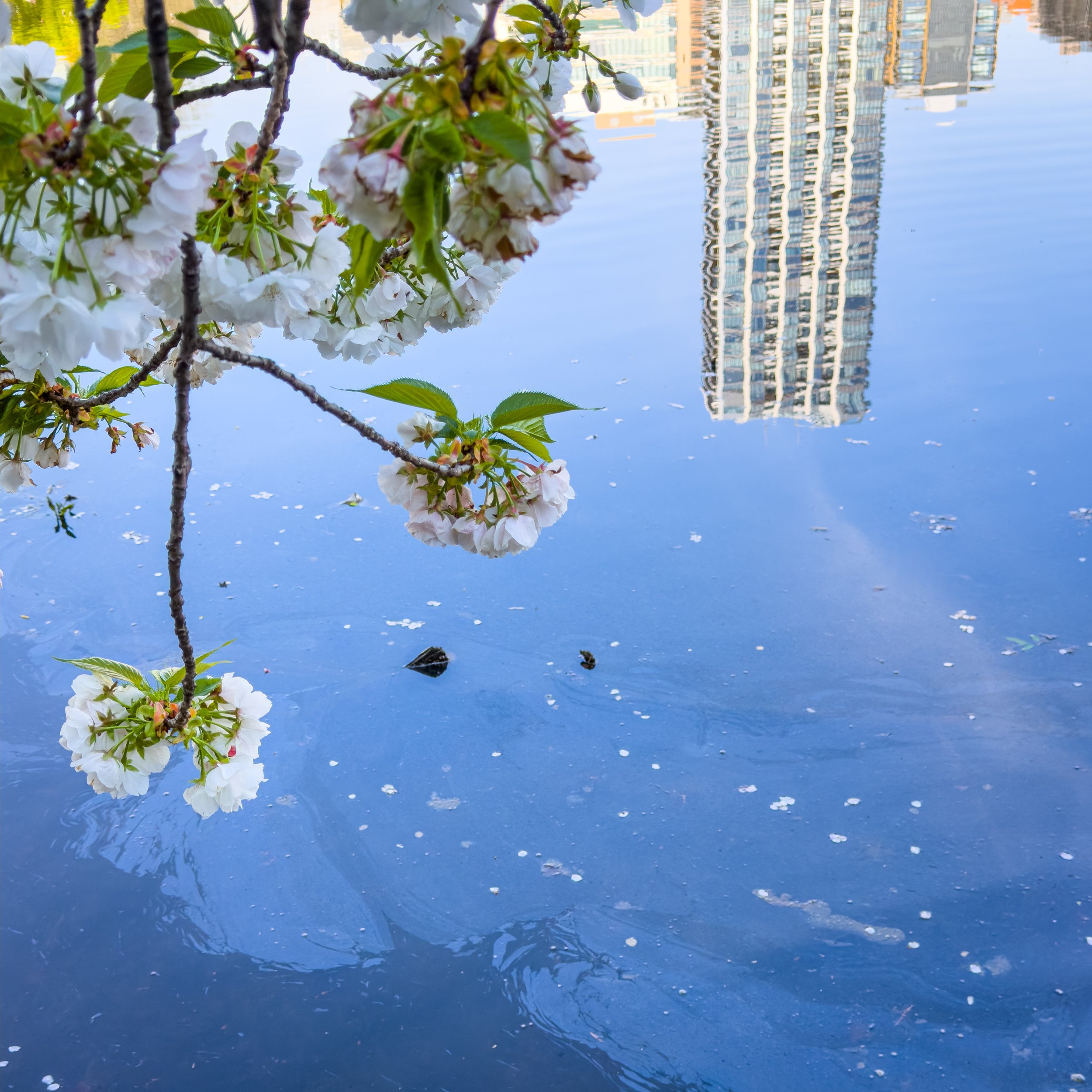
The question I get asked most often, from friends, family, students, and Uber drivers, is this: what are your thoughts on photography and AI?
It's a good question, and a fair one. We are surrounded by more images than at any point in human history. Our phones make thousands of them. And now artificial intelligence can generate a polished photograph of a place that does not exist, a person who was never born, or a moment that never happened.
The images are everywhere. But many of them are quickly forgotten.
Which raises a deeper question, the one I find more interesting: if technology can make a technically impressive picture in seconds, what is photography actually for?
My answer has not changed in the 16 years I've been teaching: photography is not only about the image. It's about the experience of seeing. It's not about capturing a technically perfect image, it's about showing the world how you interpret the environment you're in. It's what I wrote about in my book, Art of Intuitive Photography.
And that is where mindful photography begins.
Mindful photography, simply put
Mindful photography is the practice of slowing down and paying real attention to the world in front of you - and letting the camera follow.
Instead of hunting for the perfect shot, you notice. The light on a brick wall. A reflection in a puddle. The way a stranger pauses at a crosswalk. The color you might have walked past a hundred times.
The photograph becomes a record of a moment you were genuinely present for, not one you grabbed quickly and moved past.
It is the opposite of the way many of us use a camera now - distracted, rushed, half-watching the screen instead of the scene. Mindful photography asks you to put the seeing first.
Technique still matters, and I teach it with care. But technique is there to support your attention, not replace it.
This is the heart of what I call intuitive photography - my name for this deeper, feeling-led way of seeing. Mindful photography and intuitive photography are not quite the same thing, but they work hand in hand. You begin mindfully - a few deep breaths, an intention, becoming present. From there, intuition takes over and guides you to the photographs you're meant to make.
Why it matters more than ever
Here is what I keep coming back to: people will always want to live with images that have a soul - photographs they can connect to, return to, and feel something from. An AI-generated image may be impressive, but it has not lived a moment. It has not stood in the light, felt something, noticed something, or chosen to press the shutter.
Years ago I spent a New Year's morning alone on a beach, watching the sky change colors and feeling the cold wind on my face before I ever raised my camera. I wanted to connect with the moment myself first, and then photograph it. A collector who later bought one of those images told me they could smell the salt air, that they felt peace when they looked at it. They felt what I felt. That is the thing a machine cannot manufacture - the trace of a person who was actually there.
What's rare and valuable is not just the image itself, but the moment you actually noticed, felt, and were present for.
That is the real gift of mindful photography.
When you slow down enough to truly look, the practice does something quiet and lasting. You become more observant. You start to notice things in ordinary places you used to walk right past.
The photograph may be good or not. But the experience - the feeling of being present, connected, and alive in that moment - is what stays with you.
A simple mindful photography exercise to try
The next time you go for a walk, give yourself ten minutes with your camera or phone.
Do not look for something beautiful.
Instead, choose one ordinary thing: a shadow, a color, a reflection, a doorway, a patch of light. Stay with it longer than you normally would. Move closer. Step back. Change your angle. Notice what shifts.
Then make one photograph when you feel connected to what you are seeing.
That is the beginning of mindful photography: slowing down enough for the world to become interesting again.
This mindful way of seeing is the heart of one class in particular: our Art of Intuitive Photography class. Whether you use a DSLR, mirrorless camera, or smartphone, it helps you slow down, notice more, and create photographs that feel personal and alive.
Not local? You can learn the same approach from anywhere with our online course, Become a Better Photographer: Trust Your Intuition.
Want to start seeing this way on your own? I'll send you a free guide to get going - just join my email list.
I'd love to hear from you. Come find me on Instagram at @mveissid - I read every message.
In gratitude,
Mindy